Why it's trending
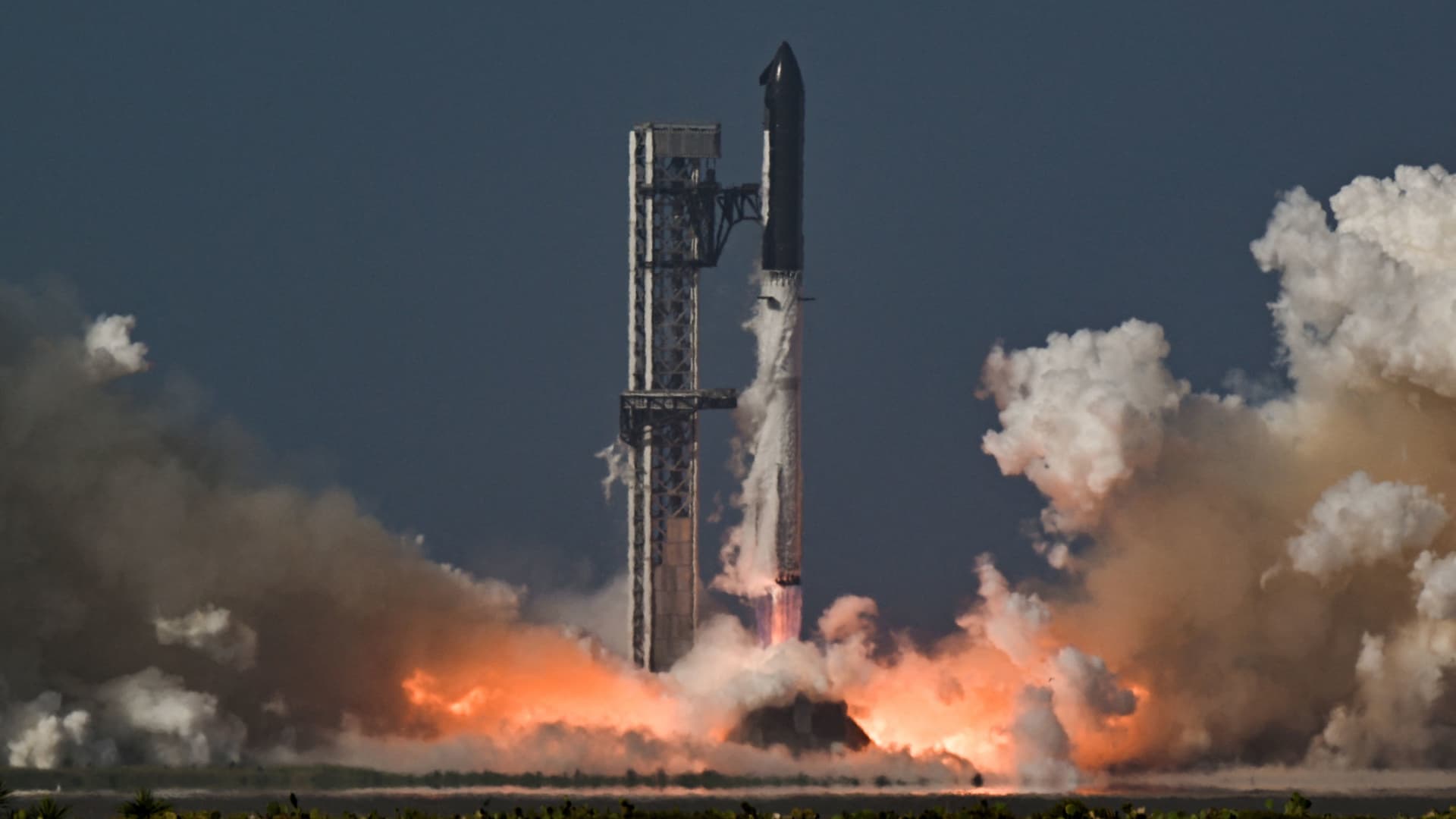
Flight 13 is trending because it is SpaceX's first Starship launch after its record IPO, it successfully deployed operational Starlink V3 satellites for the first time, and it achieved milestone splashdowns, generating excitement as 'lucky number 13.'
SpaceX launched its massive Starship rocket on its 13th test flight Friday evening, July 24, 2026, from Starbase, Texas. The rocket lifted off at 6:51 p.m. EDT (2251 GMT) after a week-long delay due to an engine abort on July 16 and weather from Tropical Storm Bertha. This was the first Starship flight since SpaceX's record-breaking IPO in June 2026, drawing significant investor and public attention.
During the flight, the Super Heavy booster separated about two minutes after launch and made a controlled splashdown in the Gulf of Mexico. However, SpaceX noted that only a subset of engines relit, resulting in a 'hard splashdown.' The upper stage continued and achieved a 'soft splashdown' in the Indian Ocean, resting intact—a first for Starship. 'This is the softest splashdown we've ever had,' said SpaceX's Dan Huot, calling it a 'dream scenario' for heatshield data.
The mission also marked the first deployment of operational Starlink V3 satellites from Starship. Twenty satellites were released into orbit, where they extended solar arrays and attempted to connect with the Starlink constellation via lasers. The satellites were designed to burn up after about 20 minutes, providing a test of their systems. SpaceX had previously only deployed simulators. The Starlink V3 satellites, built in Redmond, Washington, are larger and more powerful, with double the power generation of earlier versions.
Flight 13 overcomes a failure on July 16, when a launch attempt was aborted moments after engine ignition due to four engines failing to light. SpaceX de-stacked the vehicle, replaced at least two Raptor engines, and conducted preflight testing before the second attempt. The success is a critical step toward Starship's goal of full reusability and supporting NASA's Artemis program for lunar landings, as well as SpaceX's long-term Mars ambitions. The company is already preparing for Flight 14 and a major NASA test flight next year.
Timeline
- First Launch Attempt Aborted
SpaceX attempted to launch Starship Flight 13 but aborted after engine ignition. Four engines failed to ignite, leading to a post-ignition abort. (Source: Spaceflight Now)
- Vehicle De-stacked for Repairs
Ship 40 (S40) was de-stacked from Booster 20 (B20) and returned to the production site. B20 was also removed and rolled back. Elon Musk stated at least two Raptor engines needed replacement. (Source: Spaceflight Now)
- Booster Returns to Pad
After engine work, Booster 20 returned to Pad 2 and underwent propellant loading tests with liquid oxygen and liquid methane. (Source: Spaceflight Now)
- Ship Stacked on Booster
Ship 40 was returned to the pad and stacked atop Booster 20 in preparation for launch. (Source: Spaceflight Now)
- Weather Delay
A planned launch attempt on July 23 was scrubbed due to weather from Tropical Storm Bertha. A new window opened for July 24. (Source: Spaceflight Now)
- Successful Launch and Milestones
Starship launched at 6:51 p.m. EDT. Super Heavy booster made a hard splashdown in the Gulf. Upper stage deployed 20 Starlink V3 satellites and achieved a soft splashdown in the Indian Ocean. SpaceX called it 'lucky number 13.' (Sources: CNBC, Space.com)
Questions people ask
Why did the July 16 launch attempt abort?
The abort occurred after engine ignition because four engines on the Super Heavy booster failed to light. SpaceX subsequently replaced at least two Raptor engines and conducted additional testing before the next attempt. (Source: Spaceflight Now)
What are Starlink V3 satellites?
Starlink V3 are larger, more powerful satellites built by SpaceX in Redmond, Washington. They generate twice as much power as earlier versions and are equipped with solar arrays and laser links for the Starlink constellation. Flight 13 was their first deployment from Starship. (Sources: CNBC, Spaceflight Now)
What is the significance of the soft splashdown?
The soft splashdown was the first time a Starship upper stage landed intact in the ocean, providing valuable heatshield data. SpaceX's Dan Huot called it a 'dream scenario' for heat shield analysis. (Source: Space.com)
Join the conversation 0
Comments are reviewed before publishing.