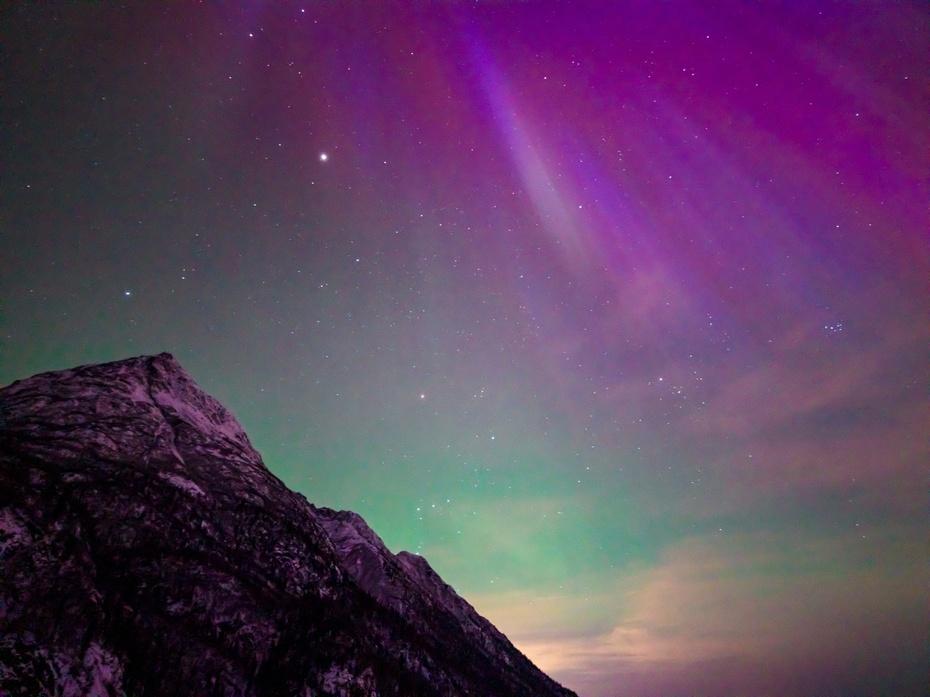
Why it's trending
The sudden interest is triggered by NOAA's forecast of a Kp index 4 aurora visible in multiple northern U.S. states on Thursday night, July 30, 2026. A Kp index of 4 is relatively moderate but often produces 'quite pleasing' displays, and the possibility of seeing the northern lights across a wide area — not just Alaska — drives search interest. Media coverage from Forbes, Yahoo, and People amplified the forecast, with People's headline even claiming 10 states, adding to the buzz.
NOAA's latest forecast predicts a northern lights display Thursday night with a Kp index of 4, indicating the aurora will be 'brighter' than usual and 'could be quite pleasing to look at,' according to Forbes. The forecast covers parts of several northern states, with Alaska having the highest likelihood. No geomagnetic storms are expected Thursday night or over the weekend, which would normally make the lights more intense.
Media coverage confirms the broad forecast but contains a counting discrepancy: Forbes and Yahoo both say 9 states could see the lights, while People's headline says 10 states. The exact list of states likely overlaps significantly — Forbes names Montana, North Dakota, northern Minnesota, and northern parts of Washington, Idaho, Michigan, South Dakota, and Wisconsin, plus Alaska. Readers should treat the exact count as approximate, as NOAA's projections often include marginal viewing areas.
The northern lights have been a frequent headline since 2024, when the sun reached the 'maximum' phase of its 11-year solar cycle. NASA said the aurora hit a 500-year peak in 2024, with activity far exceeding scientists' expectations. That peak is now easing, but occasional displays like Thursday's are still possible as the solar cycle slowly declines.
For anyone hoping to see the aurora, NOAA recommends waiting until dark — usually between 10 p.m. and 2 a.m. local time — and finding a dark, high vantage point far north. Travel photographers told National Geographic that a tripod, wide-angle lens, and low shutter speed are ideal; iPhone users should use night mode and turn off flash. As solar activity fades, opportunities like this may become rarer, so tonight's forecast offers a timely chance for northern-state stargazers.
Timeline
- Solar maximum produces prolific auroras
The sun reached the 'maximum' phase of its solar cycle, leading to frequent geomagnetic storms and auroras visible across the U.S. NASA later said the northern lights hit a 500-year peak in 2024 (Forbes).
- NOAA forecasts Kp index 4 aurora
NOAA's forecast for Thursday night shows a Kp index of 4, with the aurora potentially visible in several northern states; no geomagnetic storms expected (Forbes).
- Friday night preliminary forecast matches
NOAA's preliminary forecast for Friday night also has a Kp index of 4, covering roughly the same area as Thursday night (Forbes).
- No geomagnetic storms expected
NOAA's forecast indicates no geomagnetic storms over the weekend, which would have strengthened the aurora display (Forbes).
Questions people ask
What does a Kp index of 4 mean?
According to NOAA's forecast as reported by Forbes, a Kp index of 4 indicates the northern lights have moved farther from the poles and are 'brighter' than usual, making them 'quite pleasing to look at.' It's a moderate level on the geomagnetic activity scale.
Which states could see the northern lights Thursday night?
Forbes and Yahoo list 9 states, while People says 10. Based on Forbes, the states include Alaska (best chance), much of Montana and North Dakota, northern Minnesota, and northern parts of Washington, Idaho, Michigan, South Dakota, and Wisconsin.
Why are the northern lights visible so far south now?
The sun is currently in the declining phase of its solar cycle, but we are still feeling the effects of the solar maximum that peaked in 2024. During that maximum, solar activity was exceptionally high — NASA reported a 500-year peak — and auroras became more frequent and reached lower latitudes, a trend that continues to produce events like tonight's (Forbes).
Join the conversation 0
Comments are reviewed before publishing.