Why it's trending
The sudden 1,100-point drop in the Dow is trending because it marks the worst single-day decline since April 2025, driven by a confluence of factors: the Fed's inaction despite inflation worries, a spike in long-term bond yields to multi-year highs, escalating Middle East tensions pushing oil prices up, and ongoing weakness in semiconductor stocks. The move caught many investors off guard and signals growing unease about the economic outlook.
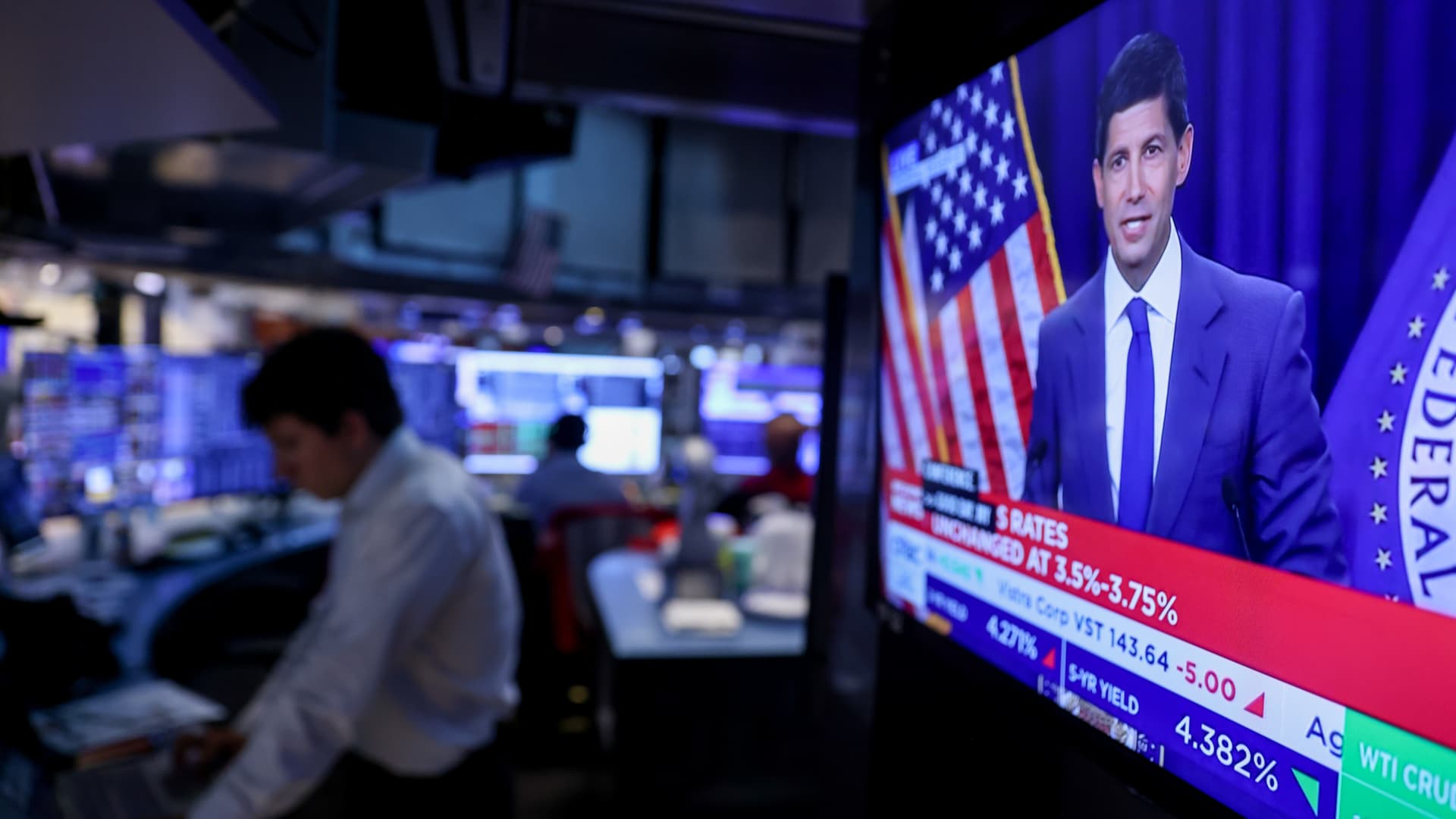
The Dow Jones Industrial Average suffered its worst day since April 2025, tumbling 1,153 points (2.19%) to close at 51,594.14 on July 28, 2026. According to CNBC, the selloff was fueled by the Federal Reserve's decision to keep interest rates unchanged, with the bond market interpreting it as a sign the central bank is falling behind on inflation. Three Fed officials had favored a hike, but the committee stood pat. Fed Chairman Kevin Warsh's tough talk during the press conference failed to convince markets, as the 10-year Treasury yield jumped 7 basis points to above 4.67% and the 30-year yield soared 10 basis points to above 5.2%, hitting its highest level since 2007.
The S&P 500 slid 1.52% to 7,316.15, and the Nasdaq Composite fell 1.74% to 24,442.94, ending the session more than 10% off its all-time high—entering correction territory. Bond expert Jeffrey Gundlach of DoubleLine argued that the Fed would need to raise rates to genuinely target 2% inflation, stating on CNBC's 'Closing Bell,' 'The long bond yield went up significantly after the press conference because the bond market vigilantes are saying, If you really want us to believe your rhetoric, you’ve got to start acting.'
Adding to inflation concerns, oil prices surged after President Trump told Fox News that the U.S. would hit Iran 'hard' in response to surprise attacks on troops. West Texas Intermediate crude advanced more than 6% to settle at $84.46 a barrel, per CNBC. The iShares Semiconductor ETF (SOXX) dropped 5.5% for its fifth straight losing session, as chip stocks faced pressure from AI spending return worries and Chinese competition. The broader market decline was broad-based, with the Dow, S&P 500, and Nasdaq all recording steep losses.
The selloff highlights growing market anxiety that the Fed may be forced to act more aggressively, or that persistent inflation and geopolitical tensions could derail economic growth. The Dow's 1,153-point drop is a stark reminder of volatility in a market already sensitive to interest rate expectations. Investors will now watch for further Fed signals, oil price movements, and AI sector developments. As Yahoo Finance reported the next day, futures stabilized somewhat, but South Korean stocks fell and Iran resumed attacks, keeping uncertainty high.
Timeline
- Fed Holds Rates Steady; Stocks Plunge
The Federal Reserve announces it will keep interest rates unchanged despite three officials favoring a hike. The Dow drops 1,153 points (2.19%), S&P 500 falls 1.52%, Nasdaq slides 1.74% (entering correction). The 10-year Treasury yield rises to 4.67%, 30-year to 5.2% (highest since 2007). Oil jumps 6% after Trump threatens Iran. Chip stocks continue decline. (Sources: CNBC, WSJ)
- Bond Market Sends Warning
DoubleLine's Jeffrey Gundlach says the jump in bond yields signals the market wants the Fed to act. 'If you really want to get to 2%, I think you have to raise interest rates,' he says. (Source: CNBC)
- Futures Steady; Iran Tensions Continue
Yahoo Finance reports that futures are steady after Korean stocks fell and Iran resumed attacks. Market remains on edge. (Source: Yahoo Finance)
Questions people ask
Why did the Dow drop over 1,000 points?
The Dow fell 1,153 points on July 28, 2026, primarily due to the Federal Reserve's decision to hold interest rates steady, which the bond market interpreted as falling behind on inflation. The 10-year and 30-year Treasury yields spiked to multi-year highs. Additionally, oil prices surged over 6% after President Trump threatened Iran, and chip stocks continued their losing streak. (Source: CNBC)
What did the Fed do and what was the market reaction?
The Fed kept interest rates unchanged despite three officials wanting a hike. Fed Chair Kevin Warsh gave a hawkish press conference, but the bond market was not convinced. The 10-year yield rose to 4.67% and the 30-year yield hit 5.2%, the highest since 2007. Stocks sold off sharply, with the Dow posting its worst day since April 2025. (Source: CNBC)
How did chip stocks perform?
Chip stocks continued their losing streak. The iShares Semiconductor ETF (SOXX) dropped 5.5% for its fifth straight losing session, pressured by concerns about AI spending returns and increased competition from China. (Source: CNBC)
Join the conversation 0
Comments are reviewed before publishing.